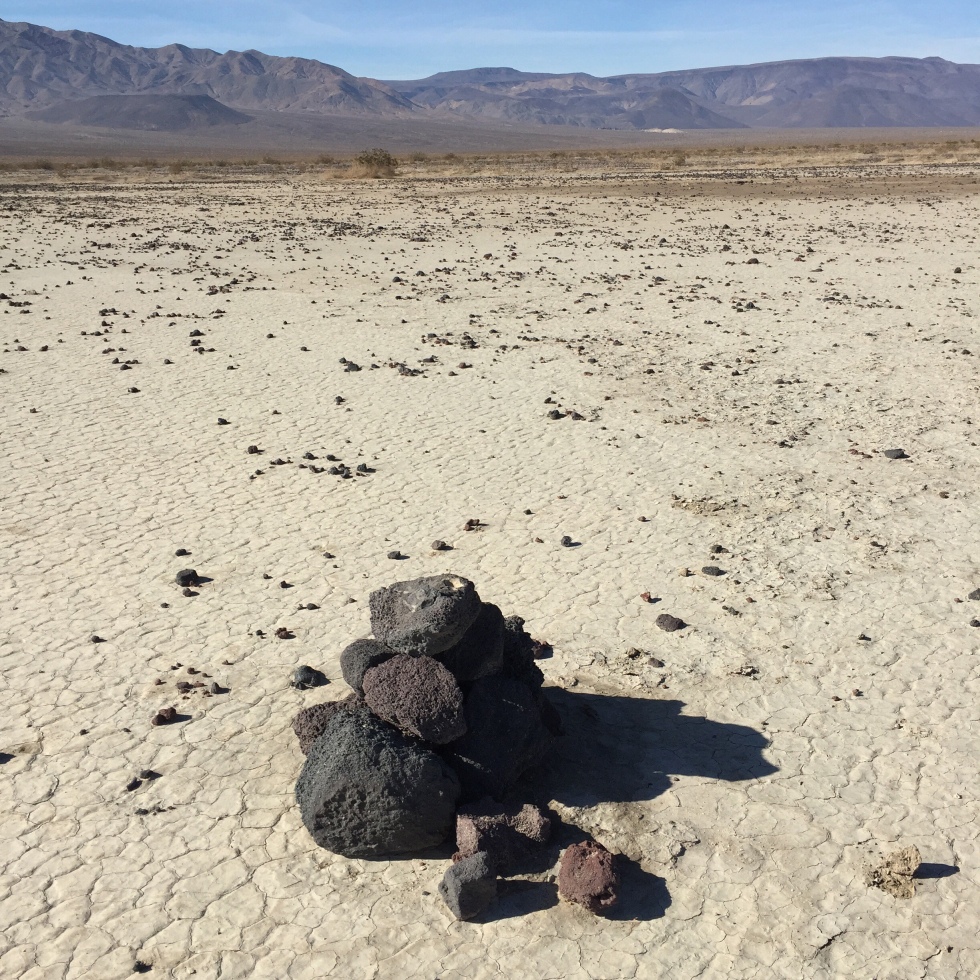

Monument to the Unknown Hitchhiker

Back in March, I wrote a post that I titled (oh-so-cleverly, I thought) No Sissy reply. In that post, I reported that I had written Even Cowgirls Get the Blues author Tom Robbins a letter about Sissy Hankshaw’s thumbs and received no response. I also expressed very little faith that I would receive any response. So today I’m here to tell you that my faith in cult-status novelists has been restored. I should never have doubted.

I wrote something like:

Dear Mr. Robbins:

For my master of fine arts in creative nonfiction, I am writing a book of essays revolving around the human thumb.  Bla bla bla blah … (to read full letter, see No Sissy reply)

I’m wondering what you were thinking when Sissy Hankshaw entered your consciousness. Which thumbs inspired you to create Sissy? . . .

Sincerely,

Ann Beman

His reply, dated May 1:

Hola Senorita Beman:

As near as I can remember, it went something like this. One night in the early seventies, I was sitting around with a couple of sculptors getting pleasantly stoned. At some point in the evening, we began riffing, as the stoned will do, on an imaginary monument to the Unknown Hitchhiker. By the next day, the sculptors had forgotten the fantasy, but I began thinking what a novel about the Unknown Hitchhiker might be like.

Thinking about that potential character, I began thinking about hitchhiking in general, and this eventually led me to focus on the human thumb. As the days and nights went by, I found a way to make my newfound interest in thumbs dovetail with other themes that interested me at the time. For example, the plight of the whooping cranes and that of adventurous young women. And as the writing took shape, a number of other interests leaked into the plot, as well.

My thumb research is just a vague memory now, but I do know that I read books on palmistry and interviewed at length a plastic surgeon whose specialty was hand repair. 

Wishing you great good fortune … , I am . . . . .

Yours to the Marrow,

Tom Robbins

Olympic Whitewater Trials this weekend on MSNBC

If, like me, your kayaker’s thumb calluses are twitching, you may want to catch the US Olympic Whitewater Trials this weekend on MSNBC.

We’ve just finished production work on the Olympic Whitewater Trials. Please tune into the broadcast airing this Sunday, May 11th on MSNBC at 12 noon eastern time,” says Olympic gold medalist Joe Jacobi on his blog:  http://goldmedalliving.blogspot.com/

Most Chocolate M&M’s in one minute

Thank you, Jamie Panas from Guinness World Records, for this tidbit:

Thumb Catapulting- Most Chocolate M&M’s in one minute
The most chocolate M&M’s a person can catapult into a receptacle in a minute using their thumb from a distance of 5 m is four achieved by Guillaume Perrin (France) at the studios of L’émission des records, Boulogne-Billancourt, France, on 17 May 2002.

http://www.flickr.com/photos/rosebloo/445545001/

Making hands

I’m late. The bell has just rung, and even though it is a cool February morning, I am sweating. I am sweating from fear of being caught out by myself - alone. I am horrified the students will make fun of me, or worse. Suddenly, I’m back in 8th grade, trying to hide the secret freak show growing under my arms. None of the other girls ever have sweat stains under their arms, certainly not at 8 in the morning.

Brrrreeeet!

What a goof I was! I should have made fun of myself in 8th grade. Fortunately, the shrill whistle shakes me back into the present from my insecurity flashback.  Two sets of boys, ‘wards,’ as they’re called here at Camp Erwin Owen, line up two-by-two outside their dormitories. The juvenile correction officers, JCOs, have marched the first set of boys, uniformed in yellow T-shirts and jeans, to the base of the stairs leading to the double-doored school building, ready to file into their classrooms. I have to pass the whole lineup.

I hurry up the steps before the wards, and beeline into the science classroom, where my friend, Katharine Edmonson, is expecting me. Katharine is the science teacher at Camp Owen, but she approaches the subject more like an artist. She rallies her students to do projects, such as creating masks out of papier-mâché, buttons, and feathers or constructing ‘robotic’ hands from cardboard, drinking straws, rubber bands, string, and masking tape. This is what I’m here for. I’m here to observe the Making Hands project in action. I want to see what the wards do for their robo thumbs.

Katharine normally just has them make three-fingered hands, based on instructions she found on the Internet. The “Give Yourself a Hand” project from YES Mag, Canada’s Science Magazine for Kids, requires a 10 cm square piece of cardboard to represent the palm, and three 2 x 9 cm pieces to act as fingers. No thumb involved.

So for my purposes, Katharine modifies the activity. Instead of cutting the cardboard into geometric shapes, the 13 students use their own hands to trace their robo versions on cardboard. 

The deal is, if they can rig their robo hands to pick up a mini Snickers candy bar, they get to eat the candy bar.

“This is the quietest this class has ever been,” Katharine says, as the silence of Snickers-motivated concentration descends on the classroom.

Every now and then, they complain because the safety scissors they are required to use are too small for their hands. These 13 students range from 15 to 17 years old, and they have been court-sentenced and placed here, on 56 acres of mountainous terrain overlooking the Kern River, for various infractions, from drug sales and possession to auto theft. They sit two to a table, facing the front of the class. They come to the front of the room to test their creations, and return to their seats either triumphant and gnawing a Snickers, or dejected and determined to rework their robo-hand so that it lifts the desired bounty.

One kid’s hand, I’ll call him Y, is outstanding, in design, construction, and function. I say, “very clever” and Y says, “Yeah, that’s why I shouldn’t be here. ‘Cause I’m smart.”

In general, the thumb is the last finger the boys work on. I note that R, the first student to finish, makes a thumb that is very low set. If I were reading R’s hand according to International Institute of Hand Analysis procedure, I would say that R has innate capacity for producing results. R is a doer. Will do. Did.

They’re not supposed to talk about what they ‘did’ to be placed in Camp Owen. The threat of pride, and therefore reward, for their crimes undermines the reform process.

Instead: “How long you been here?” asks a newer student.

“Month and a half,” says his tablemate. Neither of them look at one another. They focus on the handiwork in front of them, on their cardboard palms, fingers, and thumbs.

When the class is over, I chat with Katharine for a few minutes. We talk about how well some of the boys did, and how much potential they have, if only they’d channel it wisely. We talk about the snake in the glass terrarium by the window. We talk about skiing over the weekend. I walk out of the building at a leisurely pace. I return my visitor’s badge to the head office.

When I get to my car, I peek through the box of “robo” hands that Katharine has allowed me to keep. Cool, I think. This was a really cool project, and I’m glad I was a part of it. I look again at Y’s hand, and I feel a sense of hope. And I feel as if I have something invested in this kid. I want to be hopeful for him, for all that Y and his cardboard creation represents for the future. As I drive home, I wonder if I’m just being a goof again.

This one time, at Mbira Camp

Mbira Camp, January 6, 2008
I’ve picked out an mbira. This musical instrument of the Shona people of Zimbabwe has 24 keys, with hammered metal bottle tops mounted on a metal bar at the bottom of the hardwood soundboard, or gwariva.


The gwariva has a hole in the bottom right corner through which the little finger of my right hand pokes to stabilize the instrument while I play, allowing my right thumb and index finger to pluck the high notes from above and below the keys. The bottle caps create a buzzing sound when I play the instrument. This buzz is believed to attract the ancestral spirits, and is considered an essential part of the mbira sound, required to clear the mind of thoughts and worries so that the mbira music can fill the consciousness of the performers and listeners. The buzz adds depth and context to the clear tones of the mbira keys, and may be heard as whispering voices, singing, tapping, knocking, wind or rain.

The keys of my mbira seem to be made of spoon handles. The instrument’s craftsman, Newtan Chihota, signed his name in blue marker on the bottom edge of the gwariva. It leaves a blue tattoo-like splotch on my knees, where the soundboard sits as I play. In the first three days of this weeklong Mbira Camp, I’ve learned parts of two songs: Taireva, which means, “we need to tell you,”  and Kariga Mombe, “one who can throw a bull to the ground,” or simply, “undefeatable.”
 
Mbira Camp, January 7, 2008
I so love the sequencing, how the chosen keys, played in an order, create a song, dictating not just the harmony and melody, but the rhythm, the words, and the dance, too. All are related, and all are born of the sequence of keys played to make music.

The joy I get from practicing a sequence, from trusting my thumbs to plink the correct keys, their metal tongues all out, all asking to be fed, like baby birds in the nest. That joy reminds me of the joy in rock climbing, puzzling out the sequences with my body; or of math before calculus stomped my buzz; or of the way words fit together in lines on the page, their letters linked like turns on a slalom course.

Some of the mbira songs sound like rain before a storm really picks up. Or, like hummingbirds ascending, their spiraling flight patterns buzzing ever higher.

Many of the songs have a plaintive quality, asking a resounding Why? Why? Why?


Attendez! THUMB! mail art!

Please keep the THUMB! mail art coming. We’ve gone a whole week with nada, and we miss the joy of going to the post office and coming away with thumby treasure.


Marji’s hand: my first sculpture (under Marji’s tutelage)


photo of Marji Carroll’s hand, Day 1


sculpting Marji\'s hand with Marji, Day 1                                                                                              sculpture of Marji’s hand, Day 2


                                                        sculpture of Marji’s hand, Day 3, looking more Herculean than Marji-esque


How Is A Man’s Thumb … ? « Lovesick Billy

Someone else out there is thinking thumb. I’m not a man, so I’ve never thought of my thumb the way Lovesick Billy has pondered his. But in “Even Cowgirls Get the Blues,” Sissy Hankshaw’s brothers tug a bit on the correlation that this fellow WordPress blogger makes between his thumbs and his … Lovesick Billy:

How Is A Man’s Thumb  « Lovesick Billy

thumb-spinning

I circle Auguste Rodin’s sculpture of Jean d’Aire from the Burghers of Calais. It stands in the sculpture garden outside the Cantor Museum of Art at Stanford. I go to look closely at his thumbs. His body position reminds me of a kouros statue, except his mood is very different. Instead of demonstrating the triumphant, athletic, young Classical Greek ideal, Jean d’Aire appears resigned and world-weary. His hands are angular and rough-looking.

In 1347, according to the fourteenth-century Chronicles of Jean Froissart, King Edward III of England laid siege to the French town of Calais. After eleven months, with the people desperately short of food and water, six of the leading citizens, or burghers, of Calais offered themselves as hostages to Edward in exchange for the freedom of their city. The king agreed, ordering them to dress in plain garments, wear nooses around their necks, and journey to his camp bearing the keys to the city. Although the king intended to kill the burghers, his pregnant wife, Philippa, persuaded him to spare them, believing that their deaths would be a bad omen for her unborn child.

“Those who have attempted to interpret Rodin’s sculpture have rightly applied such labels as ‘realistic,’ ‘romantic,’ ‘impressionistic,’ ‘symbolic,’ and ‘expressionistic.’ Jean d’Aire is all of these things - and much more. Jean d’Aire is convincingly observed, he’s filled with romantic passion, he’s rendered impressionistically (the rough, slashed surface produces an ever-changing series of visual moments as one walks around the figure), he expresses profound psychological insight, and he hints at an underlying symbolic dimension that can never be adequately verbalized.”   –Professor Larry Ligo, on Davidson College’s Jean d’Aire


On the Stanford campus, just outside the Cantor Arts Center, a spider spins her web from Jean d’Aire’s right thumb to his naked right thigh. Another industrious arachnid crawls about on the figure’s left butt cheek. The wind is strong and sporadic. I wonder about the two spiders’ choices. The thumb turned inwards toward the resigned body seems a safer bet than the exposed buttock. I imagine a gust tossing the butt spider on a filament into the air, whipping him about, a tiny frame, spar, and spine on a silken kite string. The thumb spider, however, tucks into the eddy of the fingers, or of the groin. Hunkering until the gust abates, she then expresses her own spun dimensions.


Mail art contributors to April 19

Thumb! Mail Art Contributors for Jan.-Feb.

1. Roland Halbritter, Nudlingen, Germany 
http://andreas-hofer.blogspot.com/
2. Dewi, Toronto, Ontario, Canada
http://eppur-si-mouve.blogspot.com/
3. Daniel de Culla, Burgos, Spain
4. Michel Della Vedova, Limoges, France
5. Paul Tiilila, Gallery ExG, Pälkäne, Finland
6. wackystuff, BC, Canada
http://stuffbywackystuff.blogspot.com/
7. Denise Hunley, Dallas, Texas, USA
8. Anne Braunschweig, Corrales, New Mexico, USA
9. Chris Johnson, Herndon, Virginia, USA
10. Eve Laeger, Bodfish, California, USA
11. Cait Rimas, Orangeville, Ontario, Canada
12. William L. Philyaw, Shawnee, Kansas, USA
http://cutphoto.blogspot.com/
13. Denis Charmot, Marnaz, France
http://denis.charmot.free.fr/
14. Judith Skolnick, Washington DC, USA

March

15. UFO Museum, Lex Loeb, Portland, Oregon, USA
16. Andrea Jay, Staten Island, New York, USA
17. Marina Salmaso, Copenhagen, Denmark
http://salmaso.dk/
18. Inkletter, Kern County, California, USA
19. Raymond Furlotte, Montreal, Quebec, Canada
www.furlotte.net
20. Rachael Miller, North Fork, California, USA
21. Clemente Padin, Montevideo, Uruguay
22. Tamara Wyndham, New York, NY, USA
www.tamarawyndham.com/
23. Sherry Musick, Kansas City, Missouri, USA
www.smusick.etsy.com
24. Scott Ray Randall, Sacramento, California, USA
www.scottrayrandall.com
25. Petala Eytihia, Kilkis, Greece
26. Domenico Severino, Pompei, Italy

April

27. Keith A. Buchholz, Saint Louis, Missouri, USA
28. Ryosuke Cohen, Brain Cell–Fractal, Moriguchi City, Osaka, Japan
http://www.h5.dion.ne.jp/~cohen/info/ryosukec.htm

29. Elizabeth Pujalko, Buenos Aires, Argentina
http://www.elizabethpujalka.50megs.com/
30. Pamdelion, Seabrook, New Hampshire, USA
http://pamdelion.livejournal.com/4241.html
31. Lynne Lamb, Newark, Notts, United Kingdom
http://www.lynnelamb.com/
32. Dórian Ribas Marinho, Florianopólis (SC), Brasil  
33. Laurence Bucourt, Gradignan, France
www.azmailart.over-blog.com
www.lesmains.over-blog.com
34. Sylvia Camargo, Colonía Nápoles, México D.F.